

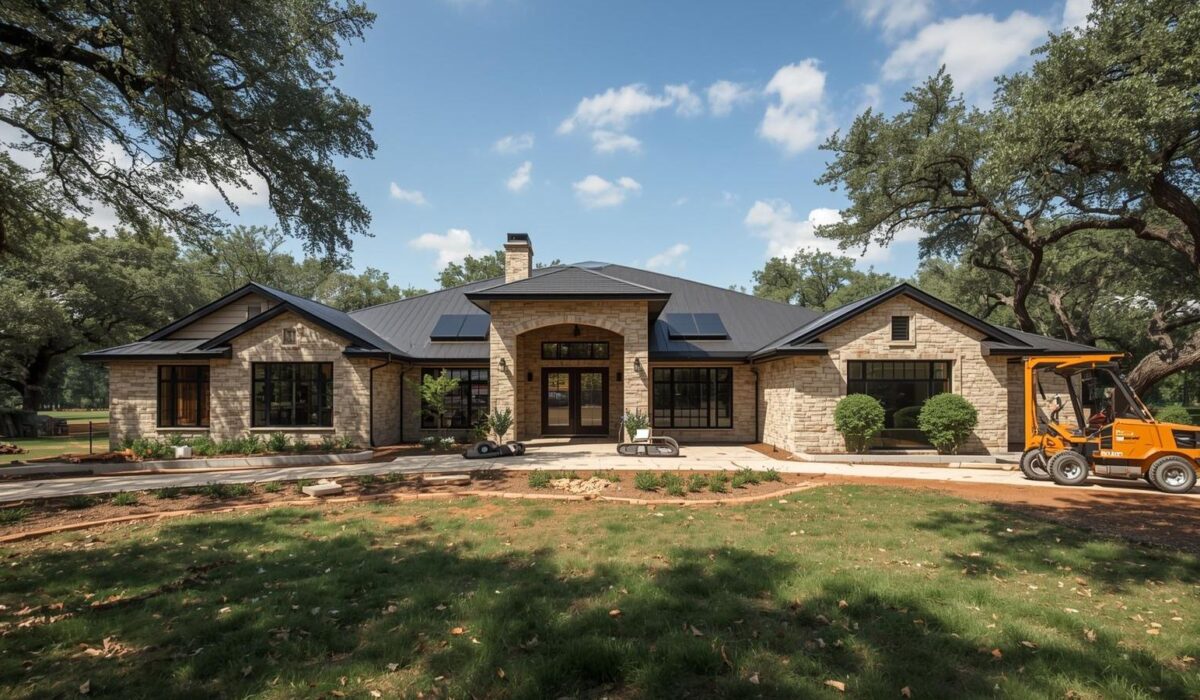
It’s the question almost every prospective Hill Country homeowner asks first — and it deserves a straight, honest answer. The cost to build a home in the Texas Hill Country varies widely depending on the type of home, the size, the level of finish, the specific location, and a handful of site-specific factors that can shift a budget significantly. There’s no single number that applies to every project, but there are ranges, drivers, and planning principles that can help you build a realistic budget before you ever break ground.
At Quality Hill Country Homes, we believe in transparency from the very first conversation. This guide breaks down what you can realistically expect to spend on a custom home, barndominium, or casita build in the Hill Country — and more importantly, what influences those costs and how to plan for them wisely.
Why Hill Country Construction Costs Differ From the Rest of Texas
Building in the Hill Country comes with a specific set of conditions that affect pricing in ways that don’t apply in flat, urban, or suburban Texas markets. Understanding these factors upfront helps you plan accurately — and avoid the sticker shock that catches some first-time builders off guard.
Terrain and site conditions: Hill Country land is beautiful precisely because of its topography — but rolling hills, rocky terrain, and caliche soil make site preparation more complex and more expensive than building on a flat, clear lot. Rock excavation for foundations, retaining walls for sloped sites, and the cost of blasting or specialized equipment can add meaningful dollars to a project budget before a single wall goes up.
Utilities: Many Hill Country properties are not on municipal water or sewer systems. Drilling a water well and installing a septic system are significant costs — typically $15,000 to $40,000 or more combined, depending on well depth and septic type. These costs are often overlooked by first-time land buyers who focus only on the construction budget.
Access and logistics: Rural properties with long driveways, unpaved road access, or remote locations increase the cost of delivering materials and getting subcontractors on site. If your property requires a new road cut or significant driveway construction, budget for that separately from the home itself.
Labor market: The Hill Country has experienced significant population growth over the past decade, and the skilled trades labor pool has not kept pace with demand. This has put upward pressure on subcontractor pricing — particularly for framing, plumbing, and electrical work — compared to more densely populated urban markets.
Cost to Build a Custom Home in the Texas Hill Country
For a fully custom stick-built home, Hill Country construction costs in 2026 generally fall in the range of $200 to $350+ per square foot of conditioned living space, depending on the level of finish and complexity of the project. Here’s how to think about those ranges:
Entry-level custom ($200–$240/sq ft): Functional, quality construction with builder-grade or mid-range selections — solid cabinetry, standard countertops, durable flooring, and reliable mechanical systems. These homes are well-built and comfortable, but don’t feature high-end custom details or premium finishes throughout.
Mid-range custom ($240–$290/sq ft): This is where most of our projects land. Upgraded cabinetry, quartz or stone countertops, tile work, hardwood or LVP flooring, more detailed trim and architectural features, and better-performing windows and doors. A solid, well-appointed Hill Country home at this range delivers a beautiful result without luxury-tier pricing.
High-end custom ($290–$350+/sq ft): Custom cabinetry, premium stone, designer fixtures, high-performance building systems, complex architectural features, and elevated outdoor living spaces. Projects at this tier are often architecturally distinctive and built to an exceptional standard of detail and craftsmanship.
To put these numbers in practical context: a 2,200 square foot mid-range custom home would carry a construction cost of roughly $530,000 to $640,000 — not including land, site work, utilities, or design fees. You can explore the full scope of what a custom build involves on our Custom Homes service page.
Cost to Build a Barndominium in the Texas Hill Country
Barndominiums are often marketed as a less expensive alternative to traditional custom homes, and in some respects they can be — but the cost picture is more nuanced than the marketing suggests. For a fully finished barndominium in the Hill Country, expect to spend $150 to $280 per square foot of finished living space.
The lower end of that range reflects a more straightforward floor plan, standard finish-out, and a modestly sized attached shop or garage. The upper end reflects a larger, more complex structure with premium finishes, a substantial shop component, and high-end mechanical systems. When you factor in the full project cost — site work, foundation, the metal building kit itself, spray foam insulation, and complete interior finish-out — the total cost of a quality barndominium often approaches that of a comparable traditional home.
Where barndominiums do provide genuine cost advantages is in large, column-free interior spaces and the ability to incorporate significant working and storage areas under the same roofline at a lower per-square-foot cost than finished living space. If you need a 2,000 sq ft home with a 1,200 sq ft attached shop, a barndo is almost certainly the most cost-effective way to achieve that combination. Learn more on our Barndominiums page.
Cost to Build a Casita or Guest House in the Texas Hill Country
Casitas and guest houses present a different cost dynamic than primary residences. Because they’re smaller structures with simpler systems, the base construction cost is lower in absolute terms — but the cost per square foot is often higher than a comparable primary home, because fixed costs like kitchen and bathroom rough-in, HVAC systems, and utility connections don’t scale down proportionally with square footage.
A well-built casita in the Hill Country typically costs $175,000 to $350,000 all-in, depending on size, finish level, and site-specific factors. A compact 500-square-foot casita with a kitchenette, bathroom, and living/sleeping area can be achieved at the lower end of that range. A larger, more luxurious 1,000-square-foot guest house with a full kitchen and premium finishes will sit toward the upper end. Our Casitas & Tiny Homes page covers the full range of what’s possible.
What’s Not Included in Construction Cost Per Square Foot
This is one of the most important things to understand when budgeting for a Hill Country build: the per-square-foot construction cost covers the structure and its finishes, but it does not include several significant line items that must be budgeted separately. Make sure your total project budget accounts for all of the following:
Land: Hill Country acreage has appreciated significantly in recent years. Depending on location, size, and access to utilities, rural parcels in Kerr, Gillespie, and surrounding counties can range from $5,000 to $30,000+ per acre. This is often the largest single line item in the total project budget.
Site work: Clearing, grading, rock removal, drainage improvements, and road or driveway construction. Budget $20,000 to $80,000+ depending on your specific site conditions.
Water well and septic: As noted above, plan for $15,000 to $40,000 for these two items combined, with significant variation depending on well depth and septic system type required by your county.
Utility connections: Bringing electrical service to a rural property, installing a propane system, or establishing internet service can each cost several thousand dollars depending on distance from existing infrastructure.
Design and architecture fees: Architectural design, engineering, and surveying fees typically run 8 to 15 percent of the construction cost for a custom home. Some builders offer in-house design services; others work with independent architects.
Permits and inspections: Permitting fees vary by county and project size but are generally a modest line item — typically a few thousand dollars.
Landscaping: Initial landscaping — grading disturbed soil, establishing native plantings, building walkways and outdoor spaces — is almost always a separate budget item from the home construction contract.
According to the National Association of Home Builders, finished lot costs and site work consistently represent one of the largest components of total project cost for custom homes — often approaching or exceeding 20 percent of the total budget. In the Hill Country, where land is valuable and site conditions are variable, this figure can be even higher.
How to Build a Realistic Budget
With so many variables in play, the most reliable way to build an accurate project budget is to work directly with an experienced Hill Country builder as early as possible in your planning process. Here’s a practical approach:
Start with your total available budget — including land, if you haven’t yet purchased a lot. Work backward from there to understand what construction budget remains after land, site work, and utilities are accounted for. Then have an honest conversation with your builder about what that construction budget can achieve in terms of size and finish level. If there’s a gap between what you want and what the budget supports, a good builder will help you identify where to adjust — whether that means scaling back square footage, choosing a different home type, or phasing the project over time.
The Consumer Financial Protection Bureau also offers useful guidance on construction loan financing — which works differently from a standard mortgage and is worth understanding before you commit to a project budget.
Frequently Asked Questions About the Cost to Build in the Hill Country
Is it cheaper to buy an existing home or build new in the Hill Country?
It depends on what’s available, what condition it’s in, and what you want. Existing homes in the Hill Country at desirable locations have appreciated sharply, and finding a move-in-ready property that checks all your boxes can be difficult. Building new gives you exactly what you want — but requires more time, planning, and upfront cost management. Many buyers find that building new is comparable in total cost to purchasing a well-located existing home and remodeling it to their taste.
Can I build a quality home in the Hill Country for under $300,000?
For a full-size primary residence, it’s very difficult in the current market. A smaller, well-designed casita or barndominium shell with modest finish-out might fall in that range, but a fully finished custom home of 1,500+ square feet will generally exceed that budget once land, site work, and utilities are accounted for. Being realistic about this upfront saves significant frustration later.
How do construction loan costs factor into the budget?
Construction loans typically carry higher interest rates than permanent mortgages and require interest payments on drawn funds during the build. These carrying costs can add meaningful dollars to your total project cost — particularly on longer builds. Factor in 6 to 18 months of construction loan interest when building your overall budget.
What’s the most common budget mistake Hill Country home builders make?
Underestimating site work and off-site costs — particularly water wells, septic systems, and utility connections. These are costs that don’t show up in a construction quote but can add $50,000 to $100,000 or more to a rural project budget. Always get these costs estimated early and build them into your planning from the start.
Get an Honest Estimate From a Builder You Can Trust
There’s no substitute for a real conversation about your specific land, your vision, and your budget. Quality Hill Country Homes has built custom homes, barndominiums, and casitas across the Hill Country, and we know how to help you get the most out of your investment — with full transparency from day one.
Browse our full services and visit our FAQ page for more answers to common questions. When you’re ready to talk numbers, we’re ready to listen.
Contact Quality Hill Country Homes today to schedule your free consultation and get a realistic picture of what your Hill Country build can look like.
Follow us on Facebook, Instagram, and Houzz to see our latest projects.