

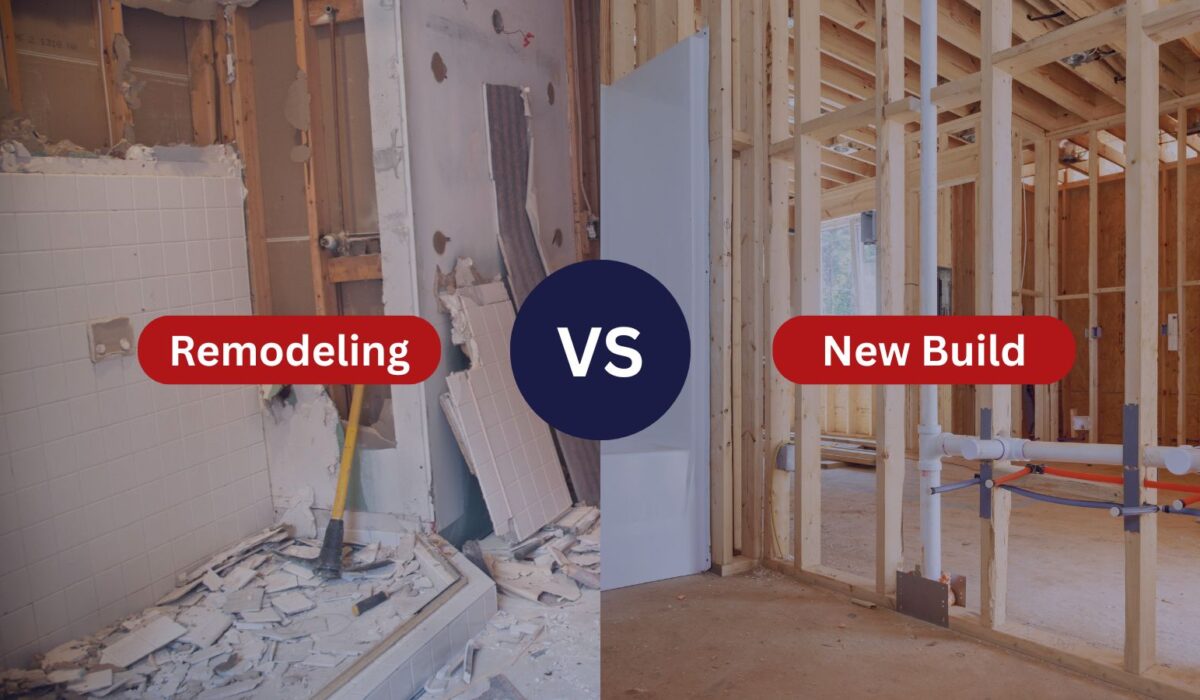
It’s one of the most significant decisions a Hill Country homeowner can face: you love your land, your community, maybe even parts of your home — but the house itself isn’t quite working anymore. The kitchen is dated, the layout doesn’t fit how you live, or you’ve simply outgrown the space. So what’s the right move? Do you invest in a major home remodeling project to transform what you have, or do you start fresh and build the Hill Country home you’ve always wanted?
There’s no universal right answer. The best path depends on the specific condition of your existing home, your budget, your timeline, your emotional attachment to the property, and what you’re ultimately trying to achieve. At Quality Hill Country Homes, we work on both sides of this equation — we build new custom homes and we do full-scale remodels — which means we can give you an honest, unbiased look at both options.
Here’s how to think through the decision.
The Case for Remodeling Your Hill Country Home
Remodeling makes the most sense when the bones of your existing home are sound, the location is exactly where you want it, and the changes you need are focused enough to execute well without essentially rebuilding everything.
You keep what already works. If your home has a great floor plan overall but a kitchen that hasn’t been updated since the 1990s, a targeted remodel can deliver dramatic results without disrupting the rest of the house. Replacing outdated cabinetry, countertops, appliances, and flooring in a kitchen or bathroom can transform the feel of an entire home — for a fraction of the cost of building new.
Location and land are irreplaceable. In the Hill Country, land is everything — and the right piece of land, in the right location, with the right views, is genuinely hard to replace. If your property checks those boxes, a remodel that makes your existing home match the quality of your land is almost always worth serious consideration. You simply can’t buy your way into certain locations at any price.
Established landscaping and site improvements have real value. Mature live oaks, established gardens, a developed driveway, an existing water well and septic system — these aren’t line items on a remodeling contract, but they represent tens of thousands of dollars in value and years of time that you’d be starting over on with a new build. A remodel lets you preserve all of that.
Shorter disruption timeline. A well-scoped remodeling project can typically be completed in two to six months for a significant renovation, compared to 12 to 18+ months for a full custom build. If minimizing disruption to your daily life is a priority, remodeling often wins on timeline.
Explore what a quality remodel can accomplish on our Kitchen Remodeling and Bathroom Remodeling service pages.
The Challenges of Remodeling — Especially in Older Hill Country Homes
Remodeling is rarely as simple as it looks on paper, and in the Hill Country, older homes can present a specific set of complications that significantly affect the scope and cost of a project.
Hidden conditions. Opening up walls in an older Hill Country home can reveal outdated wiring that doesn’t meet current code, plumbing that needs full replacement, inadequate insulation, structural issues requiring engineering attention, or the presence of problematic materials. These discoveries aren’t the fault of anyone — they’re simply the reality of older construction — but they do expand scope and add cost in ways that are difficult to anticipate upfront.
Layout limitations. Some floor plans are simply difficult to improve within the existing footprint. Moving load-bearing walls, relocating plumbing stacks, or reconfiguring structural systems can be done — but at a cost that sometimes rivals building new. If the fundamental layout of your home doesn’t work and fixing it requires extensive structural intervention, building new deserves a serious look.
Cost creep. Remodeling projects have a well-earned reputation for running over budget, largely because of the unknown conditions described above. Experienced remodelers like our team at Quality Hill Country Homes build contingency into project estimates and communicate proactively when unexpected conditions arise — but some degree of budget flexibility is wise on any significant remodel.
Livability during construction. Depending on which rooms are being remodeled, staying in the home during a major renovation can range from mildly inconvenient to genuinely difficult. Kitchen remodels in particular require planning for alternative cooking and dining arrangements for weeks or months.
The Case for Building New in the Texas Hill Country
Sometimes the right answer really is to start with a clean slate. Building a new custom home gives you a level of control over the result that no remodel — however well-executed — can fully replicate.
Complete design freedom. When you build new, every decision is yours: the floor plan, the ceiling heights, the window placement, the material choices, the flow from room to room and from inside to outside. You’re not working around an existing structure’s limitations or compromises. You’re building exactly the home you want, in exactly the way you want to live in it.
Modern performance standards. New construction allows you to build to current energy codes and beyond — with spray foam insulation, high-performance windows, efficient HVAC systems, and a tight building envelope that dramatically reduces energy costs. In the Texas Hill Country climate, the difference between a well-built new home and an older, inefficiently insulated one is enormous in terms of both comfort and utility bills.
No hidden surprises. Building new means you know exactly what’s inside the walls, under the floors, and above the ceilings — because you put it there. The peace of mind that comes with new construction is genuinely valuable, especially for homeowners who’ve been through a renovation that uncovered difficult surprises.
Better long-term value proposition on poor existing structures. If an existing home has significant structural issues, outdated systems throughout, or a layout that requires extensive reconfiguration to work well, the cost of a comprehensive remodel can approach or exceed the cost of building new — without delivering the same result. When you’re spending $200,000 to $400,000+ on a remodel, it’s worth asking whether that same investment in new construction on the same lot would produce a better outcome.
Our Custom Homes page and Barndominiums page showcase what new construction in the Hill Country can look like when it’s done right.
The Challenges of Building New
Building new isn’t without its own complications, and being clear-eyed about them is essential for anyone seriously weighing the two options.
Timeline. A quality custom home build in the Texas Hill Country takes 12 to 18 months from design finalization to move-in, sometimes longer. That’s 12 to 18 months of living elsewhere, paying rent or a mortgage on your existing home, and managing the emotional demands of a long build process. Remodeling, by comparison, is disruptive but typically shorter.
Total project cost is higher. Even on the same lot, building new involves costs that a remodel doesn’t — demolition of the existing structure (if applicable), entirely new utility connections, fresh foundation work, and the full scope of construction from the ground up. For homeowners with a fixed, modest budget, remodeling a sound existing structure often delivers better value per dollar spent.
Complexity of financing. Construction loans work differently than standard mortgages — they draw down in stages, carry higher interest rates during construction, and convert to a permanent mortgage at project completion. This adds a layer of financial management that purchasing an existing home or financing a remodel does not require. The Consumer Financial Protection Bureau’s homebuying resources offer a useful overview of construction financing options.
A Framework for Making the Decision
Rather than defaulting to one option or the other, walk through these questions with your builder to develop an informed position:
What is the structural condition of the existing home? A professional home inspection or a walkthrough with an experienced builder can reveal whether the bones of the home are sound or compromised. A structurally solid home is a much better candidate for remodeling than one with foundation issues, significant water damage, or compromised framing.
How much of the home needs to change? If you’re happy with 70 percent of the home and want to transform the other 30 percent, remodeling is likely your best path. If you’d essentially need to gut and rebuild more than half the home to get what you want, new construction deserves a hard look.
What does each option cost on your specific property? Get real numbers. Ask a qualified builder — one who does both new construction and remodeling — to walk your existing home and your site and give you a genuine assessment of what each path would likely cost. Without real numbers, the comparison is guesswork.
How important is the existing structure to you emotionally? For some homeowners, there’s genuine meaning in preserving and improving a home that has history — a grandparent’s farmhouse, a property that’s been in the family for generations. That attachment is valid and worth factoring into the decision. For others, the existing structure carries no special significance, and a clean start makes more sense.
According to the National Association of Home Builders, remodeling activity consistently outpaces new construction in established markets — largely because the existing housing stock in desirable areas is worth improving rather than replacing. The Hill Country, with its premium land values and strong sense of place, fits that profile well in many cases.
What Quality Hill Country Homes Can Do for You — Either Way
Whether the right answer for your situation is a thoughtfully executed remodel or a beautiful new build, Quality Hill Country Homes has the experience and craftsmanship to deliver it. We don’t have a financial incentive to push you toward one option over the other — we do both, and we do both well. Our job is to give you an honest assessment of your options and then execute whichever path you choose with the quality and care your investment deserves.
Review our full range of services and visit our FAQ page to learn more. Then let’s have a real conversation about your home and your goals.
Frequently Asked Questions: Remodeling vs. Building New in the Hill Country
Can I add on to my existing Hill Country home instead of remodeling or rebuilding?
Yes — additions are a common middle path that can expand square footage and add new rooms without touching the existing structure. The feasibility and cost of an addition depends on the existing foundation, the site layout, and local setback and coverage requirements. A builder who does both remodeling and new construction can evaluate whether an addition is practical on your specific property.
What if I want to tear down and rebuild on the same lot?
Tear-down and rebuild is a viable option on lots with great location but a home that’s beyond practical renovation. You’ll need to factor in demolition costs (typically $15,000 to $30,000 for a modest structure), disposal fees, and the cost of temporarily vacating during construction. The advantage is that you preserve your lot, your utility connections, and any established site improvements.
How do I know if my existing home is worth remodeling?
The clearest indicators that remodeling is worth pursuing: the structure is sound (no significant foundation, framing, or moisture issues), the location and layout are fundamentally good, and the changes you want are focused rather than comprehensive. An experienced builder can give you a realistic read on this after a walkthrough of the property.
Does remodeling or building new add more value to a Hill Country property?
Both can add significant value when done well. New construction on a premium lot in a desirable Hill Country location typically commands a strong market premium. A well-executed major remodel — particularly of kitchens, bathrooms, and outdoor living spaces — can deliver strong returns in the current market as well. The key in both cases is quality: half-done projects or poor craftsmanship destroy value rather than create it.
Let’s Talk About Your Hill Country Home
Whether you’re leaning toward a major remodel, a new custom build, or you’re genuinely not sure yet — the best next step is a conversation with a builder who can give you straight answers based on your specific home, your land, and your goals. That’s exactly what we do at Quality Hill Country Homes.
Contact Quality Hill Country Homes today to schedule your consultation. We’ll help you figure out the right path — and then help you walk it.